What if keeping up is the wrong goal?
I spend a lot of time with AI.
Probably more than is reasonable some weeks, especially for someone who isn't in a "technical" role.
I listen to podcasts, read the latest announcements, test new models, experiment at work and I pay for more AI subscriptions than I care to admit. A few weeks ago, I spent part of my days off building six different AI agents and another one I named Kevin to keep all of them organized. That long weekend was remarkably intense, and you might assume that after diving in like that, I would finally feel like I’m winning the race against AI.
It doesn't.
I can spend hours experimenting with something new before I finally start to understand what it can actually do, and then open up my email the next morning to discover three more things I'm apparently supposed to know about.
There seems to always be a new model, a new feature. A new company everyone is talking about.
With these announcements also comes a new way of working that some thought leader somewhere confidently announces will change everything about life as we know it.
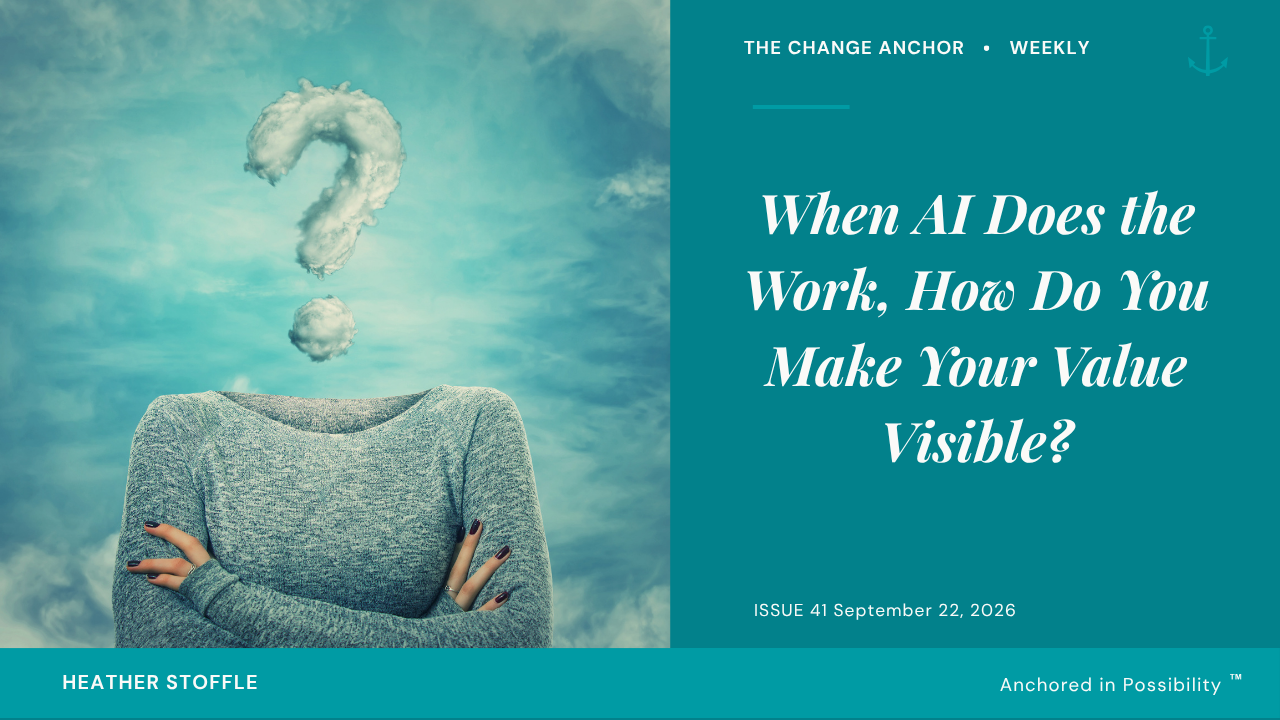
And I realized recently that somewhere along the way, I had quietly turned keeping up on AI into the goal and that's a huge problem.
Because the more I learn and the more I’m exposed to, the more I'm beginning to think "caught up" may no longer exist.
There is no finish line anymore
For most of my career, learning had a totally different rhythm.
Something changed and you learned about it or how to do it. You incorporated it into how you worked and eventually, you felt competent again. It seemed that there was usually some period of stability before the next major thing arrived.
AI doesn't seem interested in giving us that resting period.
The technology is moving faster than most of us can reasonably absorb it. And the message coming at professionals right now is basically: Learn AI. Use AI. Understand agents. Learn prompting. Redesign your workflows. Build new skills. Pay attention to what's happening to your profession. Oh, and, by the way, keep doing the job you already have.
That is one hell of a lot.
Especially when your actual life didn't suddenly clear its calendar because AI showed up.
There are still meetings and deadlines and kids and aging parents and grocery shopping and doctor's appointments and the thousand other things that already occupied our attention before anyone started telling us we needed to become AI-native.
So if the measure of whether you're doing okay is "Am I keeping up?", there's a good chance you're going to feel like you're failing. Even when you're learning. Even when you're adapting. Even when you're doing more than you’ve ever done before. Because the thing you're trying to catch isn't standing still and won’t anytime soon.
Maybe we need a different goal
If you’ve been with me for awhile, you know that I don't think the answer is to ignore AI. Quite the opposite but I think this is a significant enough shift that most of us need to understand how it affects our work, our organizations and our careers.
But that's a completely different thing from trying to stay on top of everything that's happening.
I'm becoming much more interested in a different question:
What do I need to understand well enough to keep moving forward?
That question moves me out of an endless race against everything I could know and back toward what actually matters the most. Because there will always be another tool I haven't tried. Another article I haven't read and another person on LinkedIn who appears to be six months ahead of me.
If I’m honest, I don't need to know everything they're learning. I need to know just what matters for the work and life I'm actually building and that's a much smaller problem and it’s way more solvable.
One Practical Anchor
If you're feeling behind right now, don't make a longer list of all the things you need to learn.
Try sorting what is already competing for your attention into three questions:
1. What affects me now?
What has actually changed about your work, role or industry that you need to understand?
Start there.
2. What is worth exploring?
What's close enough to your work or interests that spending an hour experimenting with it could teach you something useful? You don't have to master it completely, just play with it.
3. What can I ignore for now?
This is my favorite and probably the most important question. Something can be interesting without being important to you and you are allowed to decide that something everyone else seems excited about does not deserve your attention right now.
I've started to believe that one of the most valuable skills that we can hone in this next era won't be our ability to consume more information. It will be our ability to decide what deserves our attention in the first place.
🩵 What I'm Loving
Lately, I'm loving anything that gives my brain a place where there is absolutely nothing to optimize and nothing to decide.
I recently had a “no decision” day while in Las Vegas. I know that sounds counterintuitive, but hear me out.
I'm remarkably talented at turning almost anything into a project or a potential post, so I consciously decided that for one day, I wasn't going to task my brain with making decisions.
I let go of any preconceived notions about what the day should look like. When something came up that required a decision, I flipped a coin and went with whatever the coin decided.
Where should we eat? Flip a coin.
Should we go here or there? Flip a coin.
There was no debating, no researching and no weighing the pros and cons. I just went with it.
It was completely frictionless and surprisingly freeing.
Sometimes the most useful thing I can do with my attention is simply put it somewhere that AI isn't.
Before you go
If you've been carrying that underlying feeling that everyone else understands what's happening and you're somehow falling behind, I want you to question how you’re measuring that before you question yourself.
You probably don't need to catch up. I’ll bet that you know enough to take your next useful step. Then you can learn what the step after that requires when you get there. That's a very different way to navigate change. And right now, I think it's a much more agile and sustainable one.
Remember, you're still the author of what comes next.
Warmly,
Heather
Anchored in Possibility™ | The future belongs to those who know who they are when everything changes.