The most disorienting place in any transition isn't the ending - it's the space after it.
There's a number that stopped me this week.
80% of professionals say they feel unprepared to navigate what's happening right now.
I didn't find that surprising. I found it unsettling and familiar.
I've been that number. I lived six months of it with over 400 applications. My savings was counting down to zero. I entered into December with one mortgage payment left in my bank account. I was the sole income earner for five at the time. I wasn't unprepared because I hadn't worked hard enough or built enough. I was unprepared because nobody hands you a map for the space between chapters.
That space has a specific feeling. It's not failure. It's not laziness. It's the exhaustion of waking up every morning with the same unresolved question sitting on your chest before your feet hit the floor and the voice inside your head saying where do I go from here?
If you're in that place right now, I want you to hear this: you are not behind. You are between chapters. And those are completely different things.
Here's what twenty-five years of change work has taught me about the space between chapters, it the one thing most transition frameworks get wrong.
They treat uncertainty as the problem to eliminate. Get the plan. Close the gap. Move people from point A to point B as efficiently as possible.
But uncertainty isn't the obstacle. It's the terrain.
There's a behavioral pattern I've observed consistently in professionals navigating disruption and the ones who move through it with the least damage are not the ones who resolve uncertainty fastest. They're the ones who stop auditing the past and start asking a different question. Not what did I lose? but what did I carry forward?
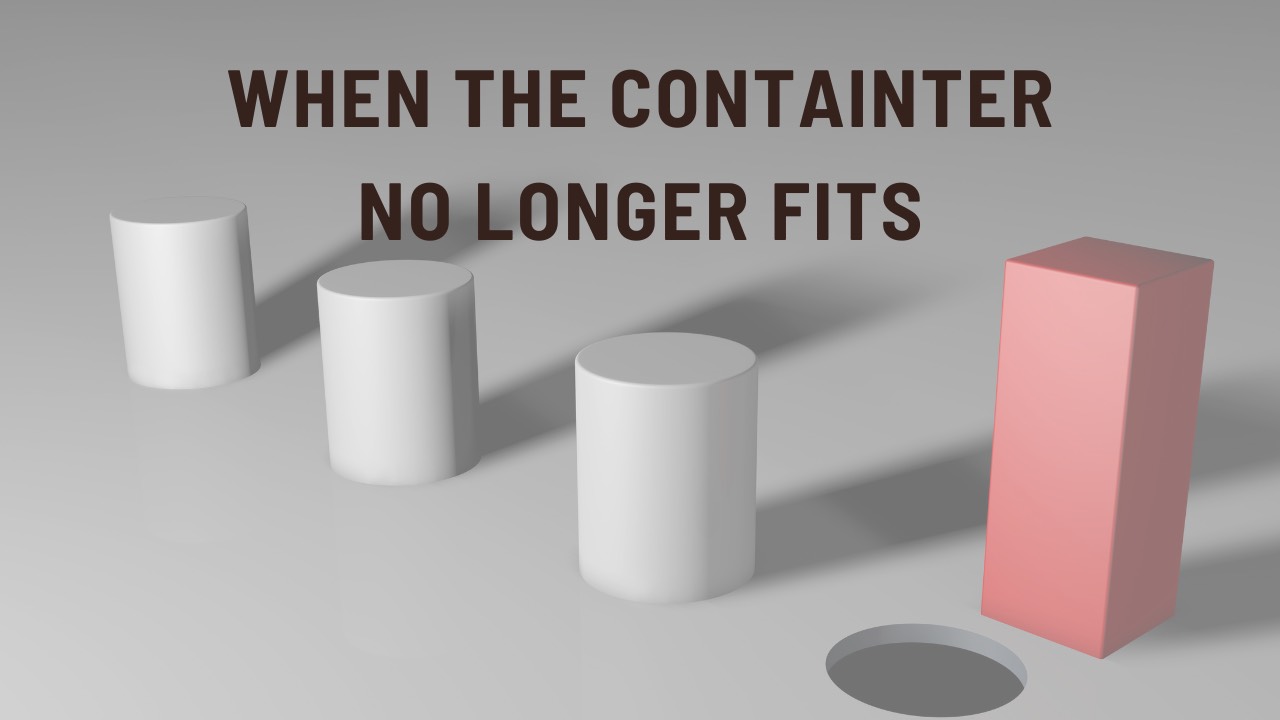
The skills, the instincts, the hard-won judgment - none of that disappeared when the ground shifted. It's waiting to be transferred to what's next. The container you find yoursel in may have changed but the contents didn't.
When you shift from trying to solve uncertainty to learning to navigate it, something opens up. Not a plan. Not yet. But direction. And direction is always where authorship begins.
This week, instead of asking yourself what you need to figure out, ask yourself what you're still carrying that hasn't lost its value.
Not what looks good on a resume. What still pulls at you even under the weight of all of this.
That pull is data. Follow it one step at a time.
One thing I'm loving this week 🩵
Earplugs and an eye mask.
I know. Stay with me.
When you're navigating significant change, your nervous system is working overtime before you even get out of bed. The research on sleep and decision-making is solid when your sleep quality suffers, your ability to think clearly, regulate emotions, and see possibility shrinks with it. I added earplugs and an eye mask to my routine recently and the difference has been quietly significant. Sometimes the most radical act of self-leadership isn't a new framework or a better plan. Sometimes it's protecting the conditions that allow you to think straight. Don't underestimate the basics when everything else feels uncertain. Your clarity depends on them.
Warmly,
Heather